About aeromedical assessment
Aeromedical assessment can seem a mysterious process!
Essentially, what the aeromedical examiner does is to determine your current functional capacity (which is related to but not quite the same as your current health), your risk of ‘medical trouble’ in the air, and the consequences of any ‘trouble’. There are ‘rules’ as to what risk is allowable for different categories of aeromedical certification. These rules are set by the international aviation authorities, and these have to some extent been modified by the UK CAA.
AMEs determine functional status/risk by putting together a combination of:
Your full medical history
An understanding of your risk factors for illness, including alcohol and smoking history
Undertaking a physical examination, including musculoskeletal exam, and testing hearing and vision
Doing simple investigations, including urine dipstick testing, sometimes an ECG, and for class 1 (professional) pilots, measuring haemoglobin
It is perhaps surprising, but with the above data a fairly accurate assessment of risk can usually be made. For some conditions further information is required, either investigations, or reports from relevant specialists. For most however this is not necessary. Occasionally the Authority Medical Section at the CAA (the regulator) will need to review the data to determine if certification is possible or if limitations need to be applied.
Further information can be found on the CAA website
https://www.caa.co.uk/media/v1hla4lm/20240304-v4-0-initial-application-for-a-uk-med-certificate.pdf
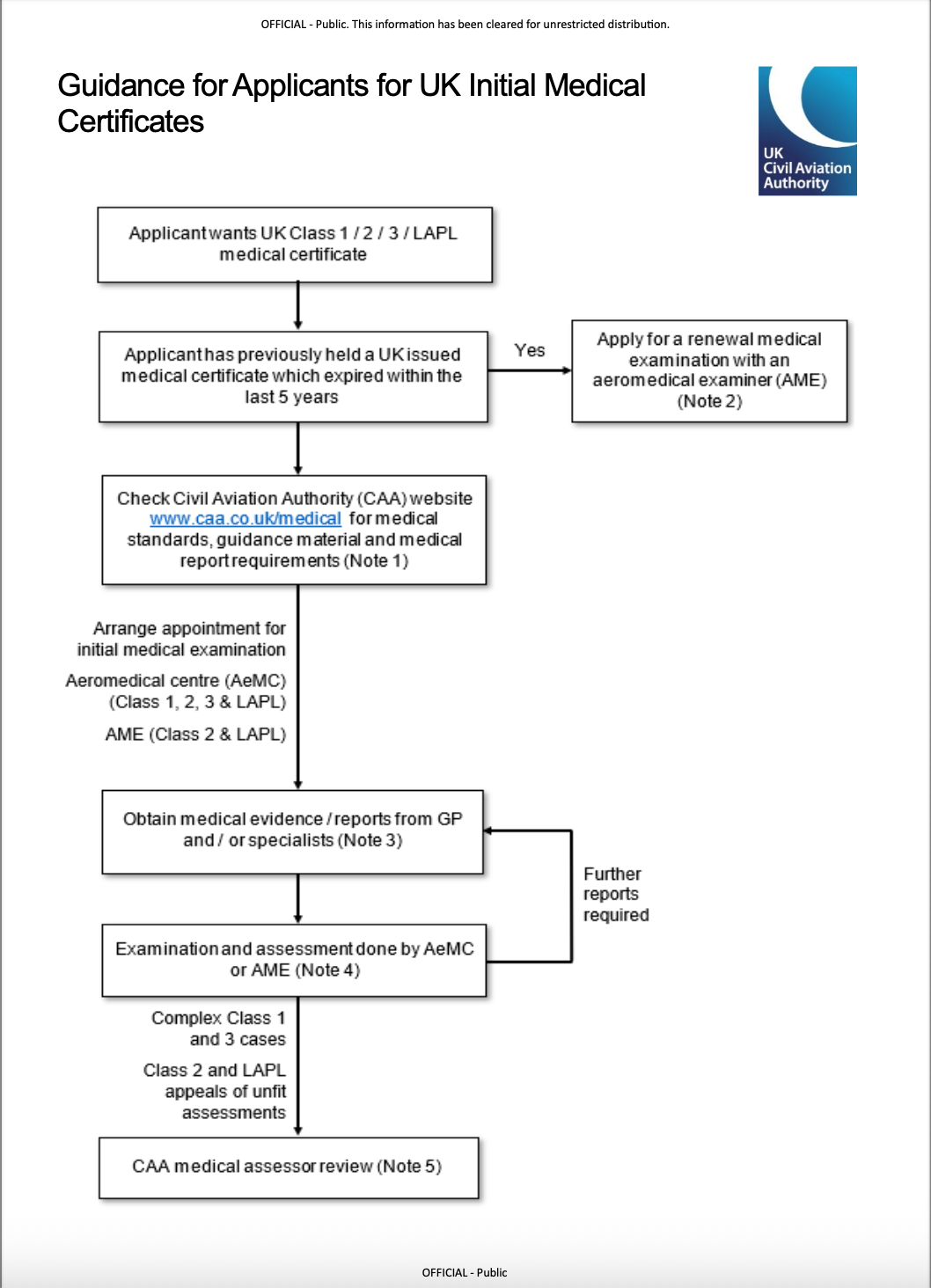
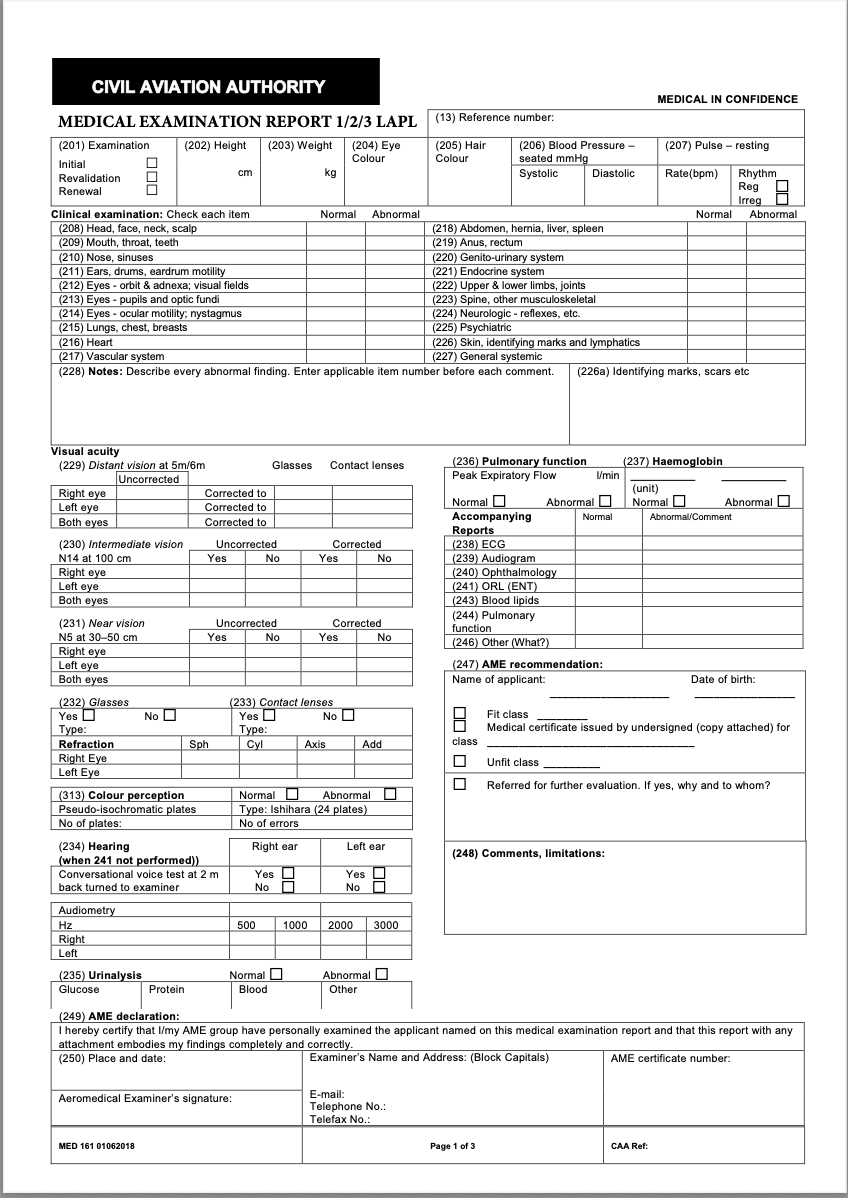
The usual components of a aeromedical assessment
A review of your previous medical history, either the full history, for initial applicants, or over the past year, for existing certificate holders. The AME obtains this from the information the pilot has declared in their cellma entry.
The AME will use the medical history as the basis for a discussion about these illnesses, general health, health risk factors etc
A physical examination
A vision test, for distant, intermediate and close vision
A hearing test, most usually asking for repetition of the spoken word, sometimes an audiogram test (for class 1/3 pilots/air traffic controllers and for private pilots with a full instrument rating)
Urine testing, most commonly for blood, protein and glucose
From time to time, an ECG
For initial class 1 applicants (who must go to an aeromedical centre, not an AME) additional investigations are required, including lung function tests, comprehensive eye tests, and blood tests. Drug testing is also undertaken.
For initial class 2 applicants, the CAA has published a useful guide
On the right is the sort of data that the AME needs to ascertain (though fortunately the days of hand filing forms has gone)